


A FEW WORDS ON NINGXIA
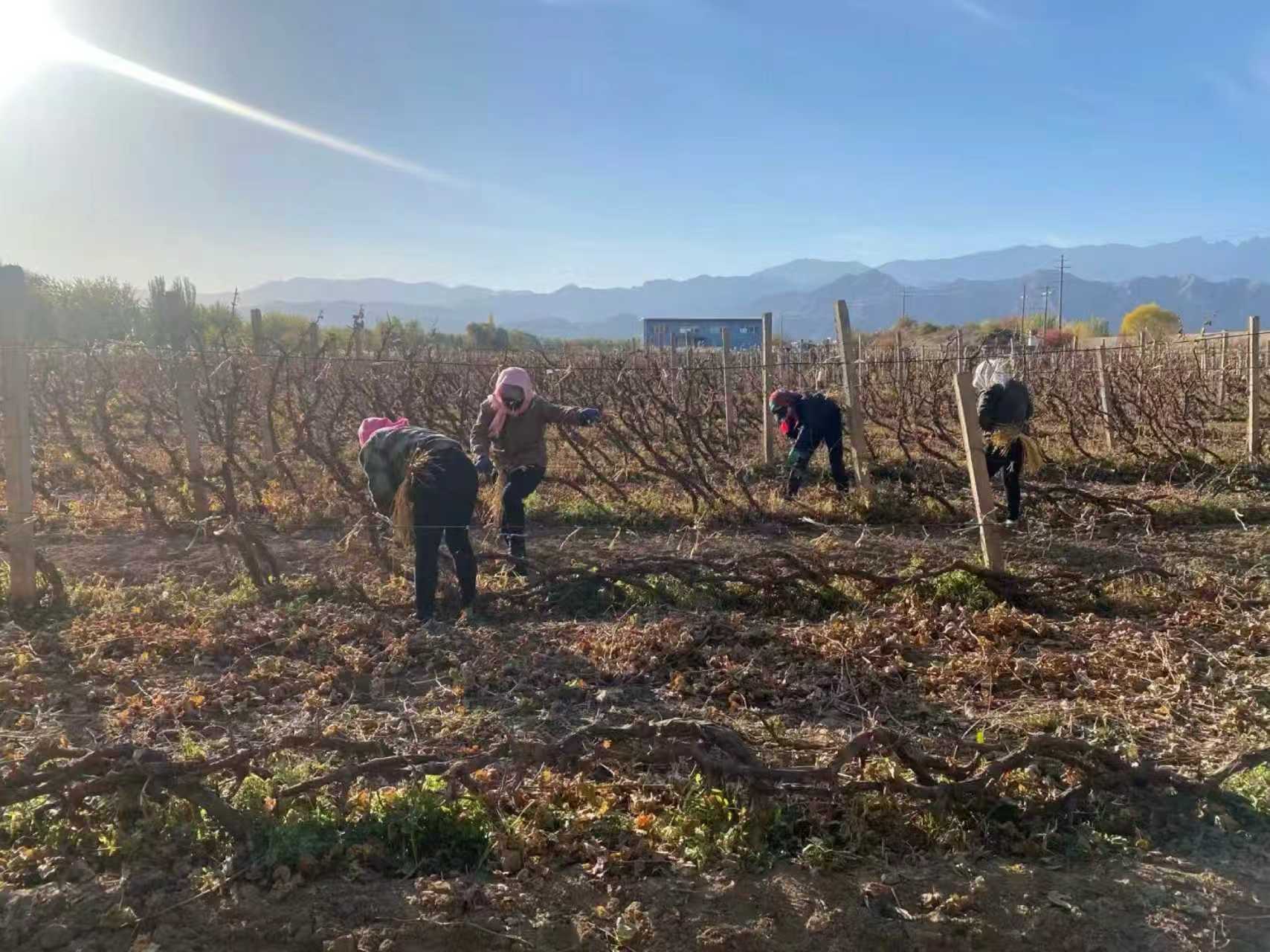
Ningxia is a place of strong contrasts. Summers are hot and winters are cold, so each autumn the vines must be buried in the soil to survive the winter. It is demanding work, but it has become part of the rhythm of growing grapes here. The climate also offers remarkable conditions for wine. Days can be intensely sunny while nights remain cool, allowing the grapes to develop both ripe sugars and vibrant aromas.
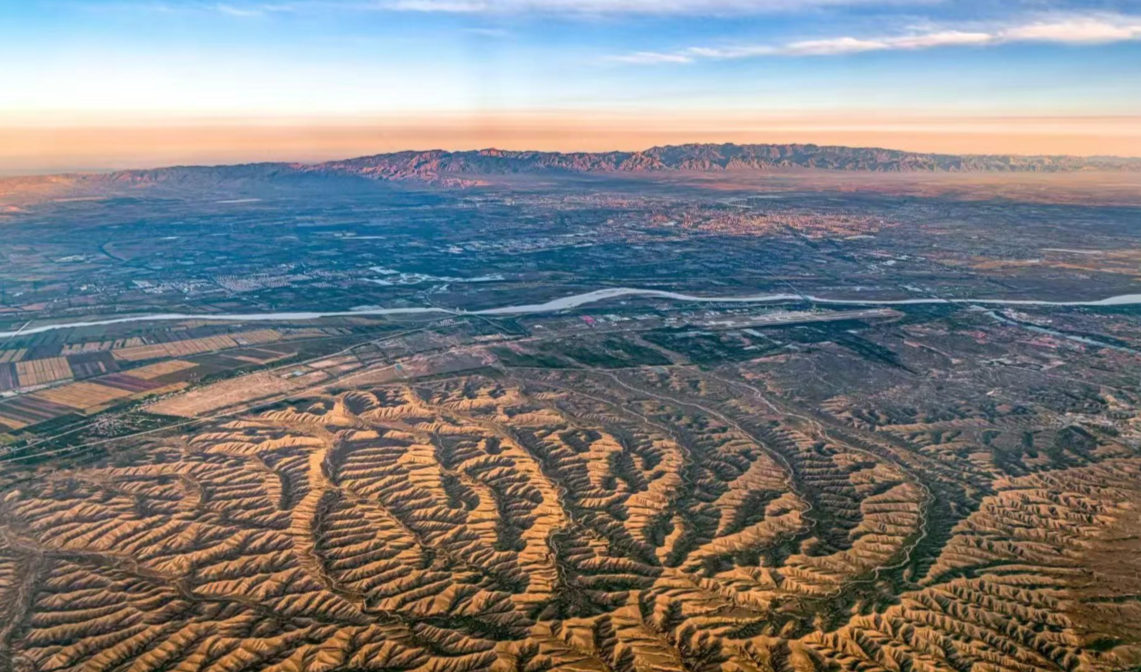
To understand Ningxia, we often suggest remembering three landscapes: the desert, the Yellow River, and the Helan Mountains. Most vineyards and wineries are shaped by their relationship to one of these three elements—some lie near the desert, where the land is dry and windswept; others rely on irrigation from the Yellow River; and many estates are planted along the eastern foothills of the Helan Mountains, where gravel soils and mountain winds influence the character of the wines.
Ningxia is also closer than many people imagine. It lies near the geographical center of China and is the country’s only Hui autonomous region. The culture, cuisine, and daily life here carry a distinct character, shaped by both the landscape and a long history of different traditions meeting in this place. For us, wine from Ningxia is not only a matter of climate and soil, but also of people, culture, and the quiet dialogue between them.
A SINGULAR MESO-CLIMATE
Our vineyard lies in a small depression where the Helan Mountains meet the city of Yinchuan. It may not look dramatic on a map, but for growing grapes it makes all the difference. This low-lying land brings us two important advantages.
First, the groundwater here is relatively high. Once the vines send their roots deeper than about two meters, they can sustain themselves naturally, without the need for industrial drip irrigation that is common across much of the region. Second, this spot acts as a gathering place for cool air. Our growing season is therefore slower, and harvest usually arrives 15 to 20 days later than in many nearby vineyards. That extra time allows the grapes to develop deeper phenolic maturity and more layered aromas. The soils here are also unusual for Ningxia. Clay dominates the surface, with gravel beneath. In a region known for dryness, heat, and rapid sugar accumulation, this combination helps retain moisture and temper the pace of ripening.
For us, this small piece of land feels truly singular within Ningxia. The wines that grow from it tend to be more restrained, more elegant, and more precise than the powerful style often associated with the region. Sometimes we describe their character as a kind of “cool fragrance”—a delicate aromatic expression that reminds us of plum blossom or lotus.
PRACTICING BIODYNAMICS IN CHINA
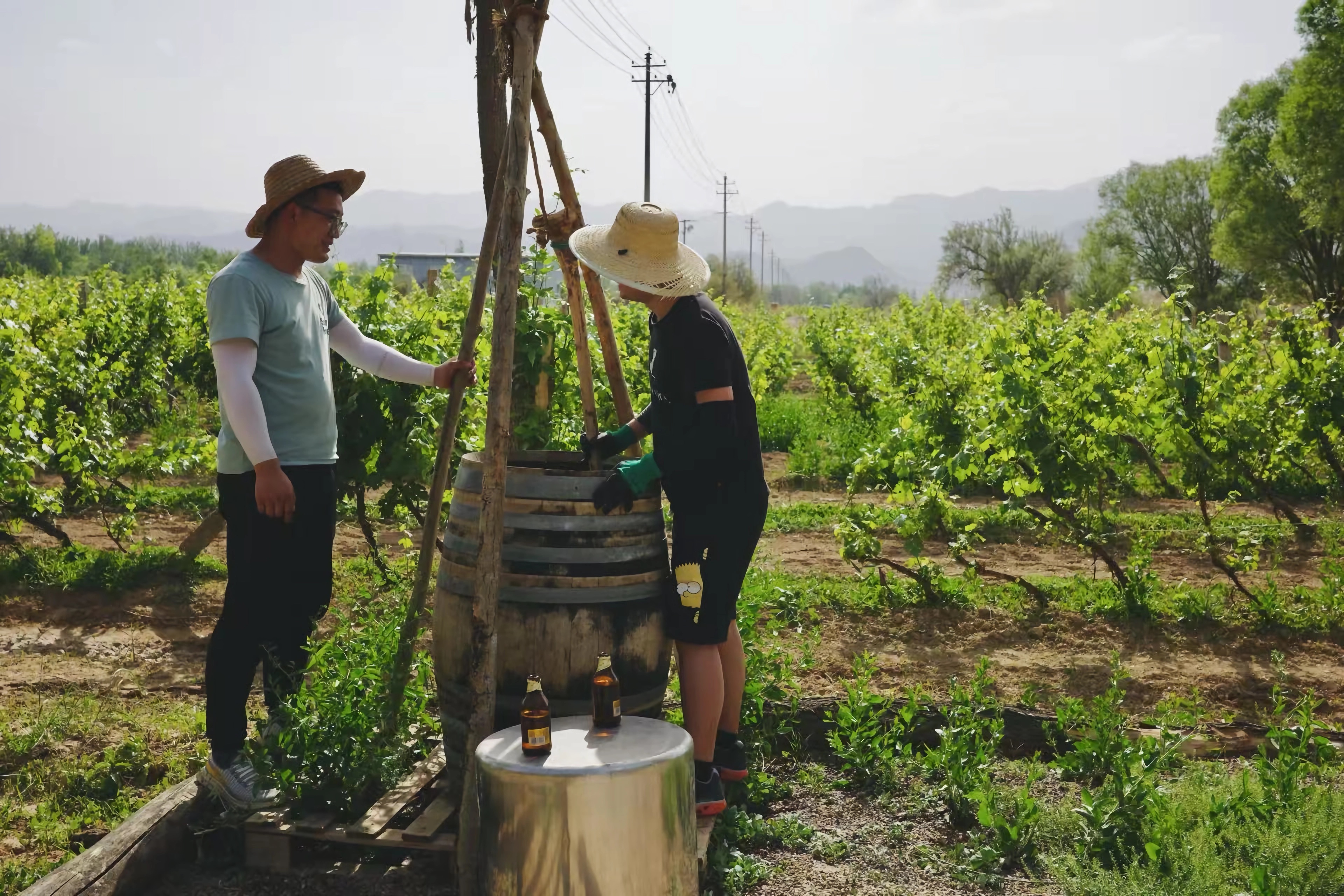
When we first came to the land that is now Domaine des Arômes, it was still wild scrub—untouched, surrounded by grasses and small trees. Its unspoiled beginning felt like a good place to start a living vineyard. Here, the vines share the land with weeds, insects, earthworms, and even the cats and dogs that wander through the rows.
Rudolf Steiner’s ideas later gave us a language for something many farmers have long felt—that a vineyard is more than a field of vines. Around the world, growers have interpreted these ideas in their own ways, and today biodynamic farming is practiced in hundreds of estates, from small family vineyards to places such as Domaine de la Romanée-Conti and Domaine Leflaive.
When we returned from Burgundy and began planting here, we started with a very simple principle: do no harm. No synthetic pesticides, no herbicides, no chemical fertilizers. The land should not be wounded—and neither should the people who care for it.We do not claim to fully understand Steiner, nor to have mastered biodynamics. We simply walk in the direction his ideas point to, learning slowly as we go. What matters to us is tending a vineyard that is truly alive, and finding quiet satisfaction in working alongside nature.
"Spirit is never without matter,
matter never without spirit."
— Rudolf Steiner, Supersensible Knowledge and Social
Pedagogical Life, Stuttgart, 24 September 1919, GA 297
THE RHYTHM OF THE MOON
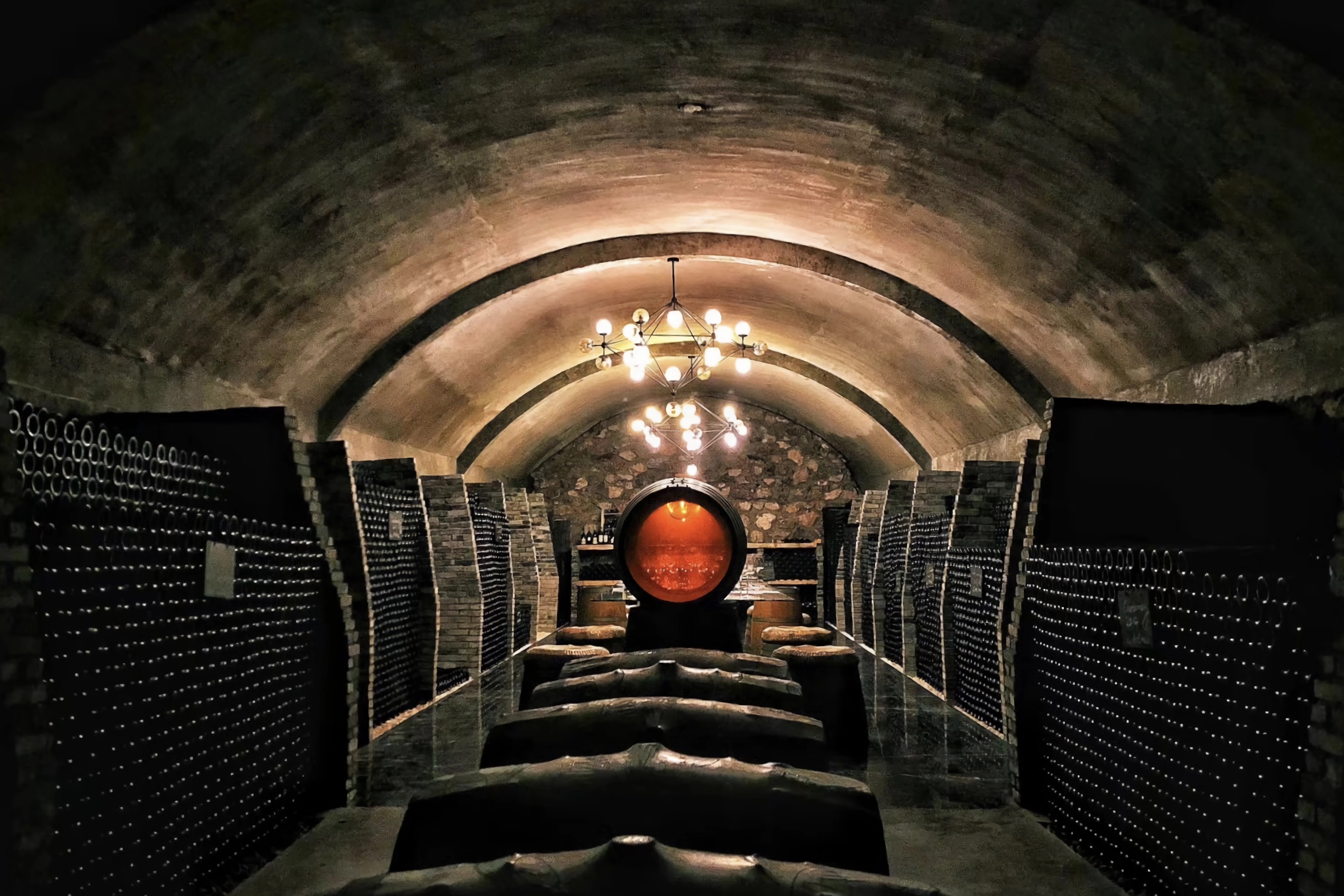
In our cellar there is an oak barrel with a glass head. Through it we can quietly watch the wine as it slowly changes—sometimes clear, sometimes gently clouded. Over the years we have noticed that these shifts often follow the rhythm of the moon. When the wine becomes bright and settled, it is usually a good moment to rack. When it turns hazy again, we simply wait. Nature has already arranged the timing; our task is mostly to observe and to listen.
The tides offer a simple reminder of this connection. The same gravitational force that moves the oceans also acts on every liquid on earth—including the wine resting in our barrels. Inside this cask our Chardonnay continues its slow transformation, sometimes crystal clear, sometimes softly veiled. For us, biodynamics is not about control but about attention. To follow nature, and to make a wine that is honest, pure, and humble—that is enough.
Fermented by wild yeasts, unfiltered and unadorned.
Only what the earth and the moon intended together.
 宁公网安备64010502000297号